Picture this: a hot summer in Philadelphia back in 1787, a group of men in powdered wigs sweating bullets as they try to shape a new nation. The U.S. Constitution didn’t just pop into existence—it was crafted through debates, disagreements, and possibly a few too many cups of coffee. But when exactly did these founding fathers put pen to parchment?
Overview Of The U.S. Constitution
The U.S. Constitution emerged from a series of deliberative sessions held in Philadelphia from May 25 to September 17, 1787. Discussions during this period involved prominent figures like George Washington, James Madison, and Benjamin Franklin, who debated the structure of the new government. Deliberations focused on balancing power among branches while safeguarding individual liberties.
Framers crafted the Constitution to replace the Articles of Confederation, which proved ineffective. They aimed to provide a stronger central government capable of addressing the nation’s challenges. Compromise played a crucial role, exemplified by the Great Compromise, which established a bicameral legislature.
The Constitution consists of a preamble and seven articles. The preamble outlines the purpose of the document, stating intentions to form a more perfect union. Articles address the legislative, executive, and judicial branches, detailing powers and responsibilities.
In addition, the Bill of Rights, ratified in 1791, consists of the first ten amendments. These amendments secure essential rights like freedom of speech and the right to bear arms. Each amendment reflects the framers’ commitment to protecting individual freedoms.
Throughout its history, the Constitution’s adaptability enabled it to remain relevant. Amendments allowed for necessary changes, catering to evolving societal values. Landmark cases have further interpreted the Constitution, shaping legal landscapes across the United States.
By establishing a framework for government, the Constitution serves as the foundation for American democracy. Its principles continue to influence legislative processes and uphold citizens’ rights within the country.
Historical Context
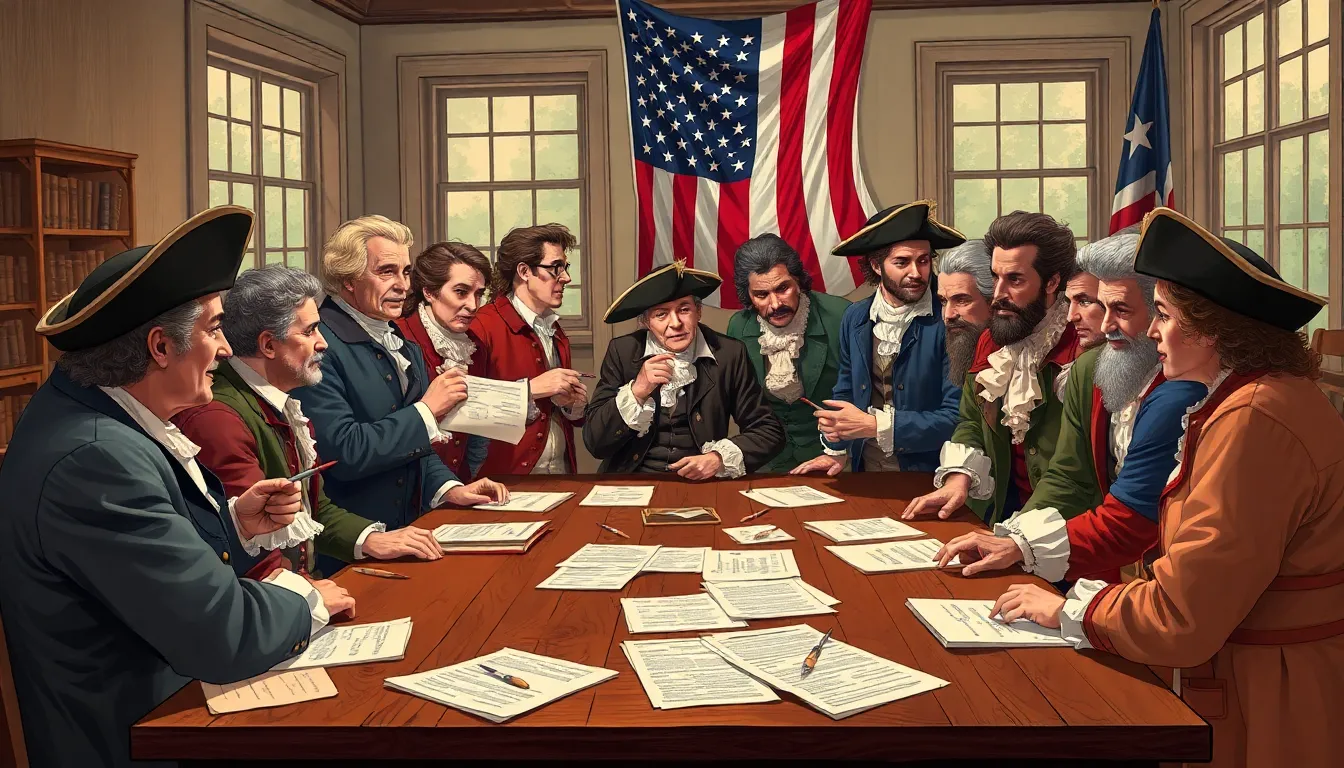
The U.S. Constitution emerged from a critical period in American history, characterized by debates over governance and liberty.
Pre-Constitutional America
Colonial America faced numerous challenges under British rule, including taxation without representation and limits on self-governance. Conflicts like the American Revolution galvanized a desire for independence. After the revolution, the Articles of Confederation provided a framework but proved inefficient, leading states to reflect on governance. Each state struggled with its economic and political stability during this time. Discontent grew over the lack of a strong national government and ineffective coordination among states. As states recognized the need for a unified approach, the stage was set for drafting the Constitution.
Influences Leading To The Constitution
Philosophical influences shaped the Constitution’s creation, most notably Enlightenment thinkers like John Locke and Montesquieu. These ideas emphasized natural rights and separation of powers. The necessity for compromise became evident through conflicts such as Shays’ Rebellion, which highlighted weaknesses in the Articles of Confederation. International examples, such as England’s constitutional monarchy, inspired debates on effective governance. The desire for a balanced government framework motivated the founding fathers to create a document that protected individual rights while establishing federal authority. Ultimately, these influences coalesced to transform deliberations into a structured response to the nation’s needs.
Timeline Of The Constitution’s Creation
The U.S. Constitution’s creation unfolded over several pivotal months in 1787, reflecting thoughtful debate among the founding fathers. This timeline captures the essential dates and events leading to its establishment.
Key Dates And Events
| Date | Event Description |
|---|---|
| May 25, 1787 | The Constitutional Convention in Philadelphia commenced. |
| June 11, 1787 | The Committee of Detail began drafting the Constitution. |
| July 16, 1787 | The Great Compromise established a bicameral legislature. |
| September 17, 1787 | The Constitution was signed by 39 delegates. |
| June 21, 1788 | New Hampshire became the ninth state to ratify the Constitution, ensuring its viability. |
| December 15, 1791 | The Bill of Rights was ratified, securing individual liberties. |
Each date marks a significant change or agreement in the process. Delegates faced various obstacles, yet they reached compromises pivotal for unifying the nation.
The Constitutional Convention
The Constitutional Convention began on May 25, 1787, attracting notable figures such as George Washington, who presided. Delegates aimed to address weaknesses in the Articles of Confederation, engaging in rigorous discussions and debates. Compromise played a crucial role as they tackled representation and state sovereignty issues.
Sessions took place in secrecy to encourage open dialogue among delegates. Conflicts arose but ultimately led to resolutions, like the Great Compromise, which balanced interests of large and small states. By September 17, 1787, the Constitution emerged, crafted through collaboration and debate, reflecting a vision for a stronger national government.
Major Figures In The Constitution’s Development
The creation of the U.S. Constitution involved pivotal individuals who played crucial roles. Influential thinkers navigated complex discussions to shape the nation’s foundational document.
Framers Of The Constitution
Key framers brought diverse perspectives. George Washington presided over the Constitutional Convention, ensuring order during heated debates. James Madison, often called the “Father of the Constitution,” contributed a wealth of ideas, drafting many foundational principles. Benjamin Franklin’s wisdom and diplomacy fostered compromise. Others like Alexander Hamilton and John Jay championed a strong national government, advocating for ratification through the Federalist Papers. Together, these framers forged a document that reflected collective values and aspirations.
Contributions Of Key Individuals
Each key individual made significant contributions. George Washington’s leadership provided stability, helping to unify delegates. James Madison’s notes recorded the convention’s details, forming a historical account that guided later interpretations. Alexander Hamilton’s vision for an energetic government shaped the framework for a robust executive branch. Benjamin Franklin’s influence encouraged cooperation among the delegates, facilitating compromise on contentious issues. These contributions culminated in a Constitution that addressed the needs of a young nation while balancing power among branches of government.
Legacy Of The Constitution
The legacy of the U.S. Constitution remains profound in shaping American society. Its enduring flexibility allows adaptation through amendments, addressing contemporary issues while respecting foundational principles. Historic amendments, like the Bill of Rights, emphasize individual freedoms and secure essential rights enjoyed by citizens today.
Landmark Supreme Court cases further interpret and uphold the Constitution, influencing legal precedents that protect liberties. The application of principles like separation of powers and checks and balances ensures that no single branch of government dominates, preserving democratic governance.
Heirs of the Constitution continuously interpret its text in ways that reflect evolving societal values. Several amendments expanded rights to include broader demographics, fostering inclusiveness and social justice. Critical debates about constitutional interpretation sparked movements advocating for broader civil rights, most notably during the Civil Rights Movement.
Generations of citizens have embraced the Constitution as a living document. Its foundational framework showcases aspirations for a just society under the rule of law. The global influence of the U.S. Constitution also inspires constitutional frameworks in various countries seeking democratic governance.
Historical figures, including the framers, envisioned a resilient document that could endure through change. Each new generation engages in discussions about the Constitution, highlighting its relevance in promoting discourse about governance and individual liberties. The Constitution stands as a testament to the collaborative spirit of its creators, embodying compromises that laid the foundation for the United States as a unified nation.
The U.S. Constitution, crafted during the summer of 1787, remains a cornerstone of American democracy. Its formation was marked by intense debates and essential compromises that addressed the needs of a diverse nation. The collaborative efforts of the founding fathers resulted in a document that balances power and protects individual liberties.
As a living document, the Constitution has adapted through amendments and judicial interpretations, ensuring its relevance in contemporary society. Its legacy continues to influence governance and uphold citizens’ rights, reflecting the enduring principles of democracy. The Constitution not only shaped the United States but also serves as an inspiration for democratic movements worldwide.