In a world overflowing with stuff, the minimalist living room design emerges like a breath of fresh air—if fresh air came with a side of stylish simplicity. Imagine a space where every piece of furniture has a purpose, and clutter is nothing more than a distant memory. It’s not just about having fewer items; it’s about creating an oasis that promotes relaxation and clarity.
Ditching the excess doesn’t mean sacrificing comfort or style. Instead, it’s about curating a space that reflects personality without the chaos. A well-designed minimalist living room invites you to kick back and enjoy life’s simple pleasures—like finally finding that remote control you thought was lost forever. So, let’s dive into the art of minimalist living room design and discover how less really can be more.
What Is Minimalist Living Room Design?
Minimalist living room design focuses on simplicity and functionality. It prioritizes essential elements and removes excess clutter to create an open, airy atmosphere. This design philosophy promotes a peaceful environment, fostering relaxation and clarity. Utilizing neutral color palettes enhances calmness, while intentional decor choices express personal style without overwhelming the senses.
Furniture selection plays a critical role in achieving a minimalist aesthetic. Choosing versatile and multi-functional pieces can maximize space efficiency. Lines remain clean and shapes simple, ensuring each item’s purpose is clear. Natural materials, such as wood and stone, often appear in minimalist designs, contributing to a warm yet uncluttered feel.
Lighting significantly contributes to the overall ambiance of a minimalist living room. Bright, unobtrusive lighting casts a soft glow without drawing attention away from the space. Large windows can provide natural light, reinforcing a connection with the outside world. Incorporating plants adds a touch of nature, enhancing both freshness and tranquility.
The arrangement of furniture impacts flow and usability. Open layouts allow for easy movement, which promotes a sense of freedom. Fewer pieces lead to a more organized look, allowing individuals to focus on their surroundings. Minimalism invites individuals to embrace quality over quantity, encouraging thoughtful choices in decor.
Minimalist living room design creates a serene, purposeful space that enhances daily experiences. It invites greater appreciation for simplicity and encourages a mindful approach to living.
Key Principles of Minimalist Design
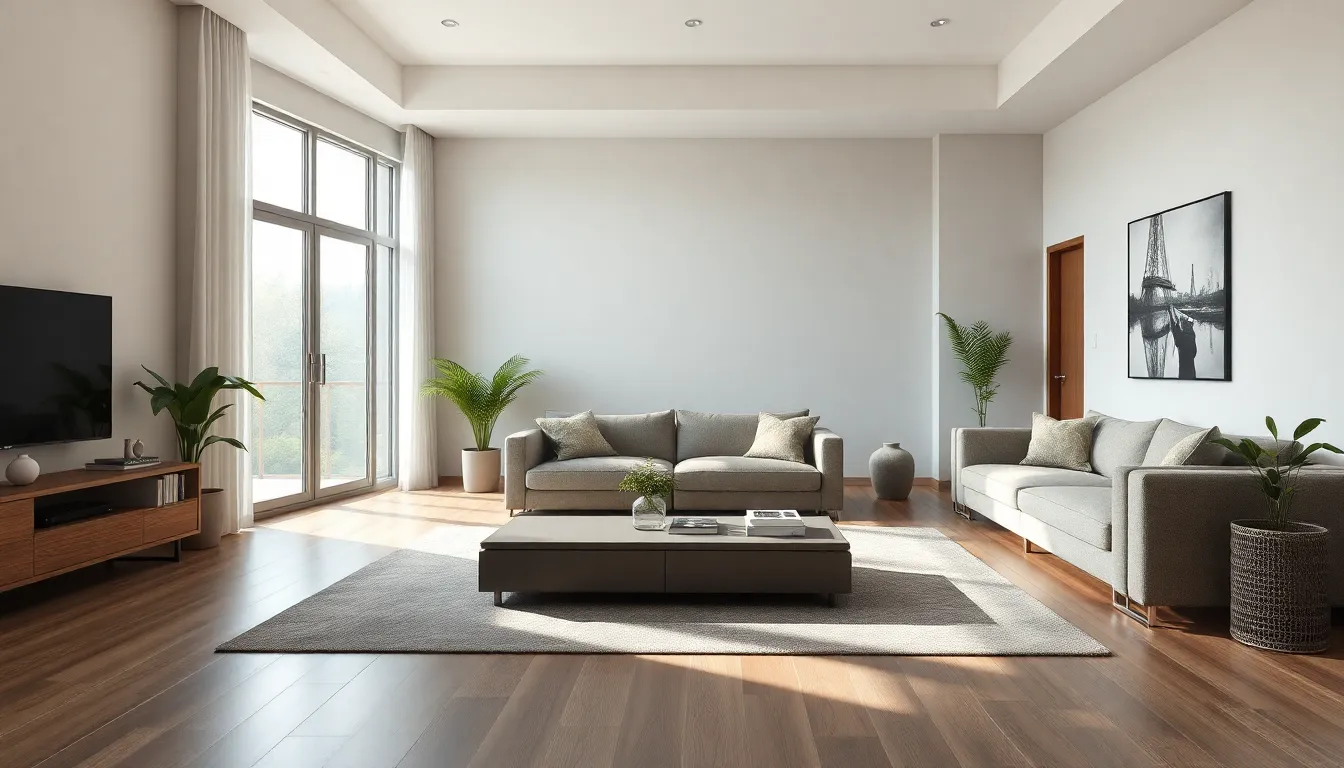
Minimalist design revolves around essential elements that foster tranquility and clarity. By understanding a few key principles, individuals can create harmonious living spaces that resonate with simplicity.
Simplicity
Simplicity reflects the core of minimalist design. It emphasizes a lack of clutter, allowing each item to serve a clear purpose. Every piece of furniture must contribute to the overall aesthetic while enhancing functionality. Neutral color schemes further amplify this simplicity, creating a serene backdrop. Thoughtful decor choices, such as art or plants, provide character without overwhelming the senses. Reducing visual noise promotes a calming atmosphere, inviting relaxation.
Functionality
Functionality remains crucial in minimalist living room design. Each item should serve multiple purposes, maximizing available space. For instance, storage ottomans offer seating and storage solutions. Coffee tables with built-in compartments eliminate the need for excess storage furniture, maintaining an open look. Smart furniture choices facilitate ease of movement, ensuring usability without sacrificing style. Prioritizing versatile pieces enhances the living experience, encouraging a clutter-free environment that supports daily activities.
Open Spaces
Open spaces create an airy atmosphere that embodies minimalist design. An unobstructed layout fosters natural light flow, connecting indoors with the outdoors. Large windows enhance this effect while incorporating elements of nature, like views of gardens or trees. Maintaining empty areas between furniture also promotes ease of navigation. Carefully considering furniture placement encourages fluid movement throughout the room. Enhanced functionality combined with open spaces ultimately cultivates an inviting and peaceful environment.
Elements of a Minimalist Living Room
A minimalist living room incorporates essential components that reflect simplicity and tranquility. This design prioritizes a cohesive aesthetic through color, furniture, and decorative accents.
Color Palette
Neutral colors dominate in minimalist living rooms, creating a soothing backdrop. Shades like white, beige, and gray promote a serene atmosphere. Accents of soft pastels can add subtle warmth without overwhelming the space. Darker colors can introduce depth, but they should be used sparingly to maintain an open feel. Consistency in the color scheme helps unify different elements, enhancing the overall appeal.
Furniture Selection
Selecting furniture involves choosing pieces that embody multifunctional design. Sofas with hidden storage, coffee tables with extendable features, and ottomans that double as seating contribute to space efficiency. Clean lines and geometric shapes enhance the visual clarity of the room. Comfort remains a priority, ensuring that functionality doesn’t compromise relaxation. Fewer but well-chosen items allow for easy movement and promote a sense of openness.
Decorative Accents
Decorative accents should complement the minimalist aesthetic by being intentional and thoughtfully placed. A few carefully chosen art pieces, such as a large canvas or a striking sculpture, can become focal points. Textiles, like a soft throw or a textured rug, add warmth without cluttering the visual space. Selecting plants can introduce life and freshness while maintaining simplicity. Each accent piece should serve a purpose, contributing to the overall calmness of the room.
Benefits of Minimalist Living Room Design
Adopting minimalist living room design offers numerous advantages that enhance both aesthetics and lifestyle quality. A primary benefit includes reduced stress, as uncluttered spaces contribute to a sense of calmness. Natural light becomes more prominent in a minimalist setting, creating an inviting atmosphere that promotes well-being.
Space efficiency is another significant advantage. Minimalist living rooms utilize multifunctional furniture, allowing for thoughtful organization and maximizing available square footage. This approach not only makes a room feel larger but also supports better flow and movement throughout the space.
Additionally, maintaining a minimalist decor fosters clarity in visual design. Each selected piece adds intentionality to the overall aesthetic, ensuring that every item serves a purpose. This careful curation encourages individuals to appreciate their possessions, enhancing the connection to personal style.
Affordability can improve with minimalist design as well. Investing in quality over quantity leads to fewer but more durable items. Over time, this choice reduces the need for constant replacements and upkeep, resulting in financial savings.
Lastly, a minimalist living room often inspires creativity and focus. Fewer distractions allow individuals to engage more deeply in activities like reading or entertaining. Embracing simplicity empowers people to cultivate a more mindful lifestyle, ultimately encouraging a greater appreciation for the richness found in less.
Tips for Achieving a Minimalist Aesthetic
Focus on simplicity when selecting decor items. Choose fewer accessories that serve a purpose while enhancing the room’s aesthetic. Incorporate multifunctional furniture pieces, as they optimize space efficiency and reduce clutter. Neutral color schemes create a calming atmosphere, so consider shades of white, beige, or gray for walls and larger furnishings.
Utilize natural light by keeping windows unobstructed. Large windows invite brightness into the space, making it feel more open and airy. Arrange furniture to promote fluid movement, ensuring easy access throughout the room. Consider strategic placement of items to foster conversation and comfort while maintaining a streamlined look.
Eliminate unnecessary items with regular decluttering sessions. Evaluate belongings based on necessity and personal significance, removing anything that does not contribute to the overall design. Implement storage solutions that keep essentials organized without disrupting the minimalist vibe. Items that double as storage can be especially beneficial.
Introduce subtle texture through materials and fabrics. Mixing metals, wood, or textiles can add warmth and depth without overwhelming the space. Enhance the ambiance with unobtrusive lighting options, such as recessed fixtures or minimalist lamps that blend seamlessly with the decor.
Curating art or statement pieces brings character without overriding simplicity. Choose one or two key artworks that resonate personally, allowing them to stand out. Emphasizing intentionality while making selections supports the minimalist philosophy, reinforcing the importance of quality over quantity in design.
Embracing minimalist living room design can transform any space into a serene retreat. By prioritizing simplicity and functionality, individuals can create an environment that not only looks inviting but also enhances daily life. Choosing versatile furniture and a neutral color palette fosters a sense of calm while allowing personal style to shine through.
With intentional decor and strategic arrangements, a minimalist living room promotes fluid movement and clarity. This approach encourages a mindful lifestyle where quality takes precedence over quantity. Ultimately, minimalist design isn’t just about aesthetics; it’s about cultivating a peaceful atmosphere that enriches everyday experiences.