In a world buzzing with chaos and clutter, the minimalist Japandi living room emerges as a serene oasis. Imagine stepping into a space where simplicity meets functionality, and every piece of furniture feels like it’s on a first-name basis with tranquility. This design philosophy, blending Japanese minimalism with Scandinavian coziness, invites you to kick back, relax, and maybe even contemplate life’s big questions—like why your cat insists on sitting on your keyboard.
Understanding Minimalist Lifestyle
The minimalist lifestyle emphasizes simplicity and intentionality. It encourages individuals to declutter both living spaces and minds, leading to a more fulfilled life. This approach values quality over quantity, promoting items that serve a purpose or spark joy.
Embracing minimalism often involves reducing material possessions, which creates more functional living environments. Ideal spaces should reflect personal values, showcasing only what is necessary and meaningful. As a result, individuals may experience less stress and more peace.
Decor elements in minimalist settings should focus on clean lines and neutral color palettes. These choices foster a calming atmosphere, essential for relaxation and contemplation. Natural materials, like wood and stone, enhance the sense of tranquility often sought in minimalist designs.
To achieve a minimalist aesthetic, people should prioritize multi-functional furniture. Such pieces maximize space and utility, making a room feel more open. Simple furniture arrangements further contribute to this spacious feel by allowing for easy movement and breathing room.
Incorporating plants adds a touch of nature and life to minimalist environments. They serve as visual interest while promoting a sense of well-being. Choosing low-maintenance varieties ensures that individuals remain focused on simplicity rather than upkeep.
Minimalism transcends aesthetics, impacting lifestyle choices. Adopting intentional habits, like mindful consumption and conscious living, fosters a deeper connection to the present moment. This holistic approach makes the minimalist lifestyle more than just a design choice; it becomes a way of life.
Overview of Japandi Design Aesthetic
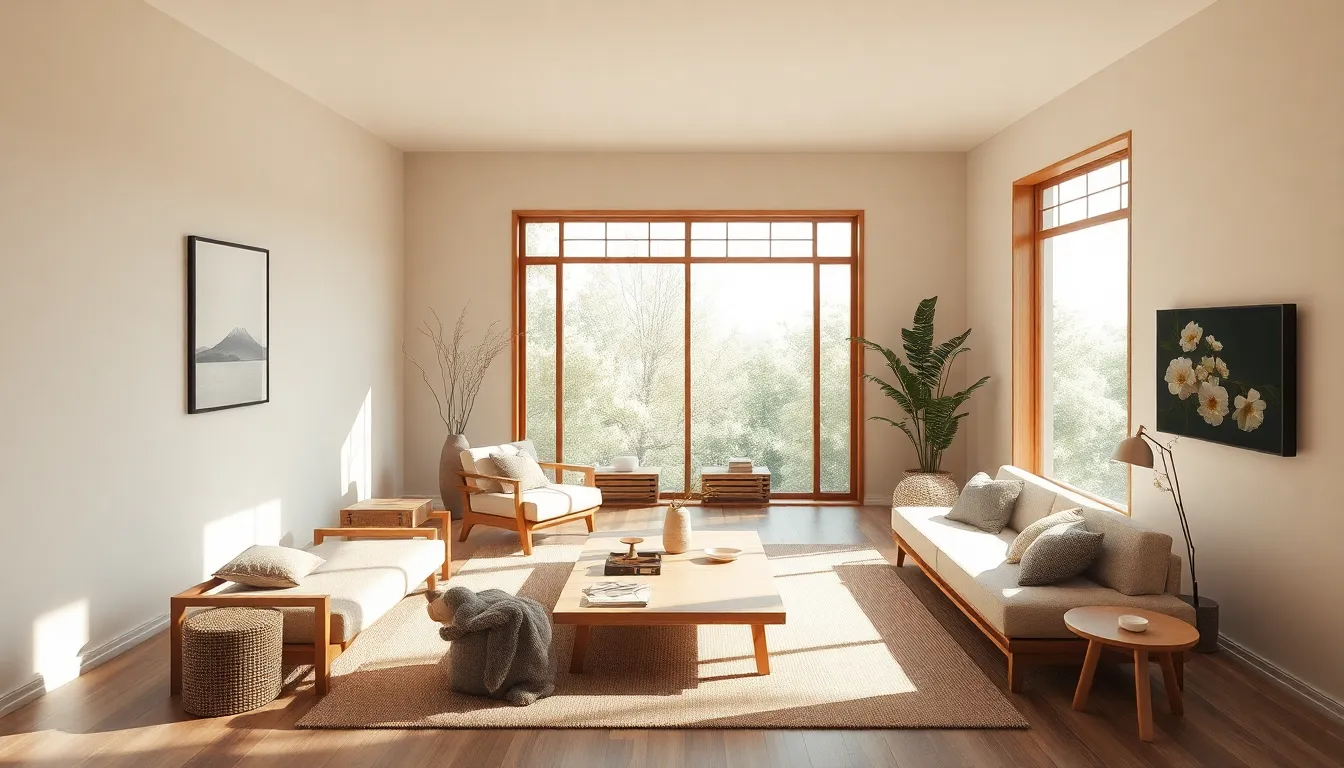
Japandi design merges the essence of Japanese minimalism with Scandinavian warmth. This aesthetic fosters simplicity and calm, creating inviting living spaces that emphasize functionality.
Key Characteristics of Japandi Style
Japandi style centers on simplicity and a harmonious blend of natural materials. Clean lines create a sense of order, while neutral color palettes invite tranquility. Functionality plays a crucial role, emphasizing multi-functional furniture that maximizes space. Each piece serves a purpose, resulting in uncluttered environments that promote relaxation. Textures matter, with a focus on soft textiles that add warmth and comfort. Natural light complements these features, enhancing the overall serene ambiance.
Influences of Scandinavian and Japanese Design
Scandinavian design contributes warmth and coziness to the Japandi aesthetic. Open spaces and practical furnishings reflect a lifestyle rooted in simplicity. Japanese design, on the other hand, emphasizes minimalism and a connection to nature. Natural elements like wood, stone, and bamboo play significant roles in this combination. Functionality remains paramount, ensuring that every item has a purpose. Both styles celebrate craftsmanship, valuing quality materials and thoughtful design, which results in a balanced and inviting atmosphere.
Creating a Minimalist Lifestyle Japandi Living Room
Creating a Japandi living room involves thoughtful decisions that reflect minimalist principles. This space encourages relaxation and intentionality through careful selection of colors and furniture.
Choosing the Right Color Palette
Selecting a neutral color palette sets a calm foundation. Shades like soft beige, muted gray, and warm whites create an inviting atmosphere. Accent colors, such as deep greens or soft blues, add interest without overwhelming the senses. These tones promote serenity and complement natural materials used in furnishings. Lighting also plays a key role; natural light enhances the overall ambiance, highlighting subtle variations in color. Incorporating texture through textiles or finishes can elevate the aesthetic while maintaining simplicity.
Essential Furniture Pieces
Furniture choices significantly impact the room’s functionality and appearance. Choosing multi-functional pieces maximizes space while offering practical solutions. A low-profile sofa serves as a focal point while providing comfort. Sturdy coffee tables and minimalist shelving units facilitate organization, displaying meaningful items. Opting for natural materials, like wood or stone, establishes a connection to nature and enhances visual warmth. Adding a few select decorative pieces, such as ceramics or plants, personalizes the space, inviting tranquility without clutter. Each chosen item should prioritize both form and function, contributing to the overall minimalist philosophy.
Incorporating Natural Elements
Natural elements play a crucial role in achieving a serene Japandi living room. Emphasis on organic materials fosters a calming atmosphere, anchoring the space in tranquility.
Use of Textiles and Materials
Textiles like linen and cotton enhance the comfort level of a living room. Choosing natural fibers promotes breathability while adding subtle texture. Wood furniture complements these fabrics, offering warmth and a tactile experience. Stone accents, such as slate or marble, introduce a grounding element, connecting the indoors with nature. Implementing neutral hues in upholstery aligns with the minimalist aesthetic. Each material selected should reflect simplicity and function, allowing for a cohesive design.
Adding Greenery and Plants
Incorporating plants brings vibrancy to a Japandi living room. Choosing low-maintenance options like succulents or snake plants ensures visual appeal with minimal upkeep. Positioning greenery near natural light sources boosts growth and enhances aesthetic value. Use ceramic or wooden pots to maintain the harmonious design theme. Plants effectively soften hard surfaces and improve air quality. Each addition should support the overall goal of a tranquil, connected environment, reinforcing a sense of peace and well-being.
Tips for Maintaining a Minimalist Space
Regular decluttering enhances a minimalist environment. Set aside time each month to evaluate belongings, keeping only what serves a purpose or brings joy. This review helps identify unnecessary items that add clutter.
Establish a designated place for each item. Organizing belongings ensures that everything has a home, making it easy to maintain order. Implementation of storage solutions, like baskets or boxes, can simplify this process.
Focus on quality over quantity when purchasing new decorations. Opt for pieces made from natural materials that align with Japandi aesthetics. High-quality items tend to have a longer lifespan, reinforcing the value of intentionality in a minimalist lifestyle.
Limit the number of decorative objects displayed. Showcase only a few meaningful pieces to draw attention and create a serene atmosphere. This intentional curation highlights the beauty of simplicity.
Create routines that promote cleanliness. Tasks such as dusting and vacuuming will maintain a fresh environment without becoming overwhelming. Minimalist spaces often appear larger and more inviting with regular maintenance.
Incorporate plants into the space strategically. Low-maintenance greenery adds life without complicating care. Selecting a few well-placed plants can enhance air quality and provide a calming element.
Utilize multi-functional furniture to optimize space. Investing in items with dual purposes supports the minimalist ethos while creating an uncluttered living area. This practical approach maximizes utility and maintains simplicity.
Embrace natural light in the living area. Allowing sunlight to enter creates warmth and enhances the mood of the space. Light, airy environments contribute to a feeling of tranquility, complementing the overall design.
Embracing a minimalist Japandi living room creates a serene sanctuary that enhances well-being. By blending Japanese minimalism with Scandinavian comfort, individuals can cultivate a space that promotes relaxation and intentional living. Each design choice reflects a commitment to quality and functionality, ensuring that every element serves a purpose.
The focus on natural materials and neutral color palettes fosters a calming atmosphere while encouraging mindfulness. Regular decluttering and thoughtful arrangements maintain order and tranquility, allowing the space to breathe. Incorporating greenery further enriches the environment, adding life without overwhelming it.
Ultimately, adopting Japandi principles not only transforms living spaces but also encourages a holistic minimalist lifestyle that values simplicity and peace. This harmonious approach can lead to a more fulfilled and balanced existence.