Imagine walking into a living room that feels like a breath of fresh air. Minimalist interior design isn’t just a trend; it’s a lifestyle choice that transforms cluttered chaos into serene simplicity. With clean lines and a focus on functionality, this approach creates spaces that are not only visually appealing but also incredibly calming.
Gone are the days of wrestling with oversized furniture and endless decor. Instead, it’s all about choosing a few key pieces that spark joy and serve a purpose. Whether it’s that sleek sofa or a stunning piece of art, every item in a minimalist living room tells a story without shouting for attention. So, if you’re ready to embrace the art of less is more, let’s dive into the world of minimalist living room design and discover how to create a space that’s both stylish and peaceful.
Overview of Living Room Minimalist Interior Design
Living room minimalist interior design emphasizes simplicity and functionality. This approach focuses on using essential pieces that serve a purpose while creating an inviting atmosphere. Natural materials often play a significant role in achieving this aesthetic, with elements like wood and stone enhancing the overall appeal of the space.
Neutral color palettes typically dominate minimalist designs, incorporating whites, beiges, and soft grays. These colors help to create a serene environment that promotes relaxation. Large windows frequently allow ample natural light, contributing to an airy feel throughout the room.
Furniture selection involves prioritizing items with clean lines and geometric shapes. Choosing a few key pieces, such as a low-profile sofa or a simple coffee table, maintains balance and enhances visual openness. Accessories remain minimal, with well-placed items that provide a sense of personality without overwhelming the space.
Storage solutions play a critical role in maintaining order. Utilizing built-in shelving and hidden storage helps reduce clutter, ensuring the living room remains functional. Each piece should contribute to the overall design, further reinforcing the minimalist principle that less is more.
Incorporating plants adds life and a touch of nature, enhancing the serene atmosphere. Air-purifying plants, like snake plants or peace lilies, visually complement the design while promoting a healthier indoor environment.
Ultimately, living room minimalist interior design creates harmonious spaces that reflect a thoughtful balance of aesthetics and functionality. It represents a lifestyle choice aimed at enhancing comfort and tranquility in everyday living.
Key Principles of Minimalism
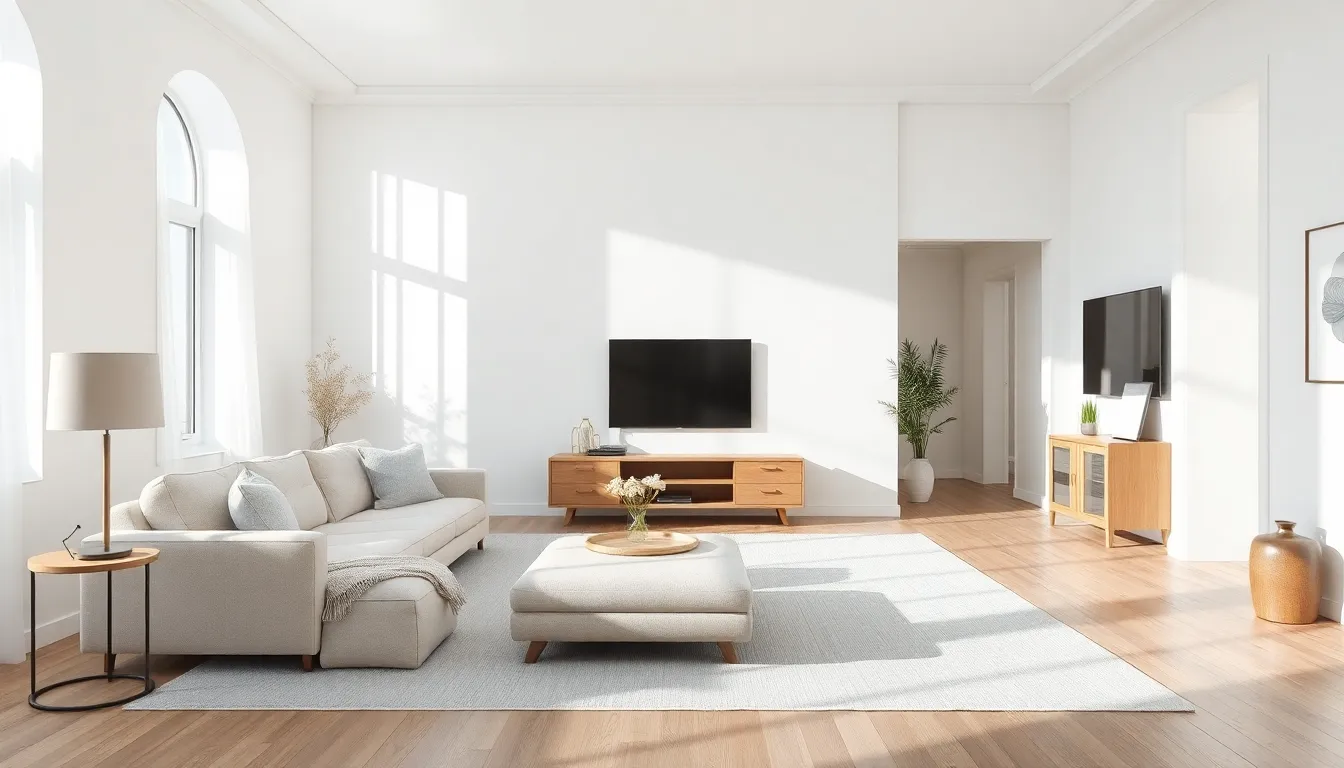
Minimalism in interior design revolves around essential elements that create serene living spaces. Several principles guide the implementation of this aesthetic.
Simplified Color Palettes
Neutral color palettes dominate minimalist designs. Whites, beiges, and soft grays create a calming atmosphere. These colors work together to foster tranquility and openness. Contrast can be introduced through natural materials like wood or stone for added warmth. Using color sparingly highlights functional pieces without overwhelming the space. Overall, a simplified palette establishes a cohesive visual identity.
Functional Furniture Choices
Functional furniture takes precedence in minimalist interior design. Selecting pieces that serve a specific purpose enhances usability. Sofas with clean lines contribute to the overall aesthetic while maximizing comfort. Multi-functional furniture, such as ottomans with storage, promotes practicality. Clear geometric shapes help maintain balance and visual openness. Every furniture item should enhance the environment without burdening it. Each choice reflects a commitment to simplicity and thoughtful design.
Essential Elements of Minimalist Living Rooms
Living room minimalist interior design focuses on creating harmonious and functional spaces. Key elements enhance tranquility while maintaining stylish simplicity.
Decluttering Techniques
Eliminating unnecessary items fosters a serene environment. Prioritize selecting pieces that serve a purpose. Donate or discard items that lack presentation value. Regularly assess belongings for relevance to current needs. Use storage solutions like baskets and built-ins to hide less attractive items. Simplifying decor with a few curated art pieces maintains visual interest. Aim for a sense of openness when organizing.
Use of Space and Light
Utilizing natural light positively impacts the aesthetic. Large windows promote an airy feel, making spaces feel spacious. Arrange furniture to maximize openness and movement. Create zones for activities, such as reading or socializing, without overcrowding. Choosing light, neutral colors reflects sunlight, enhancing brightness. Incorporating mirrors strategically can amplify light as well. Emphasizing a seamless flow between indoor and outdoor spaces can elevate overall ambiance.
Popular Styles and Inspirations
Exploring popular styles in minimalist interior design can inspire unique living room aesthetics. Two significant inspirations are Scandinavian minimalism and Japanese Zen design.
Scandinavian Minimalism
Scandinavian minimalism embraces functionality and simplicity. This style often features light wood tones and soft textiles, creating a warm and inviting atmosphere. Neutral color palettes dominate, with whites and grays providing a calming backdrop. Clean lines define furniture, emphasizing practicality through well-designed pieces. Natural light plays a key role, often enhanced by large windows. Accessories remain minimal, focusing on a few thoughtfully chosen items. Indoor plants are frequently integrated, promoting a connection to nature and adding vibrancy to the space. This approach fosters a balance between comfort and modern design principles.
Japanese Zen Design
Japanese Zen design emphasizes tranquility and simplicity in living spaces. This style prioritizes open floor plans, which promote a sense of spaciousness. Neutral, earthy tones create a serene environment while natural materials, like bamboo and stone, enhance authenticity. The use of minimal furnishings encourages mindfulness and intentionality. Decorative elements are kept to a bare minimum, allowing for a peaceful atmosphere. Gardens or indoor greenery often complement the decor, bridging the gap between indoor and outdoor areas. Simplified aesthetics in Japanese Zen design aim to create a harmonious space conducive to relaxation and reflection.
Benefits of Minimalist Living Room Design
Minimalist living room design offers several remarkable advantages, enhancing both the atmosphere and practicality of a space.
Psychological Effects
Clutter-free environments contribute significantly to mental well-being. Decluttering promotes focus and reduces stress by creating a calming atmosphere. Minimalism invites tranquility, allowing individuals to unwind in a serene setting. It also encourages mindfulness, as less visual distraction enhances the overall experience of the space. The simplicity of the design fosters a sense of control and clarity in daily life. Light, neutral color palettes enhance feelings of peace, nurturing emotional stability over time.
Practical Advantages
Minimalist design emphasizes functionality, offering many practical benefits. Reduced furniture choice simplifies cleaning and maintenance, making everyday tasks feel less burdensome. Multi-functional furniture, like sofas that convert to beds, maximizes usage while minimizing excess. Efficient storage solutions keep items organized without sacrificing style, supporting a tidy environment. Natural materials such as wood and stone improve durability, fostering sustainability. Large windows ensure adequate natural light, promoting energy efficiency while elevating ambiance. Overall, this design style harmonizes beauty and practicality, enriching daily living.
Embracing minimalist interior design in the living room transforms spaces into havens of tranquility and style. By focusing on essential pieces and a neutral color palette, individuals can create an inviting atmosphere that promotes relaxation. The thoughtful arrangement of furniture and the use of natural materials enhance both aesthetics and functionality.
Incorporating elements like plants and maximizing natural light further enriches the environment, fostering a seamless connection between indoor and outdoor spaces. Ultimately, minimalist living room design not only elevates the visual appeal but also nurtures mental well-being, making it a powerful choice for those seeking comfort and clarity in their everyday lives.